- Editorial Expertise: Men's Health, Healthy Aging, Nutritional Supplements, Evidence-Based Wellness
You did everything "right" this year. Cut back on red meat. Started walking more. Maybe even gave up butter. And then the bloodwork comes back and your LDL is still climbing.
If that sounds familiar, you're not alone, and you're not doing it wrong. Rising cholesterol after 40 is rarely just a diet problem. It's usually a sign that something in how your body processes fat and sugar has quietly changed, and no amount of willpower with a fork is going to fix that on its own.
🏆 The Short Version: After 40, cholesterol often rises not because of what you're eating, but because your metabolism is slowing down at a cellular level — making it harder for your body to clear excess LDL and process fats efficiently. Diet and exercise are still the foundation, but a growing number of men are adding targeted nutritional support (like ColestZen) to help their body do what it used to do on its own.
Support Healthy Cholesterol
Support Healthy Cholesterol
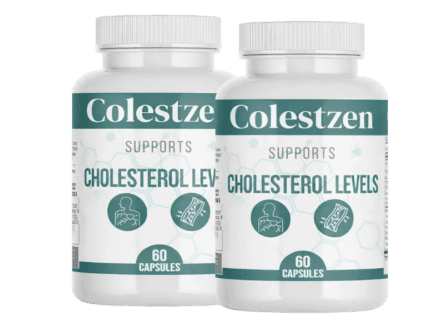
ColestZen combines 9 plant-based ingredients and 9 micronutrients to support cholesterol, blood sugar, and circulation — backed by a 60-day money-back guarantee.
Why Cholesterol Creeps Up After 40 (Even When You're "Doing Everything Right")
Your body has natural systems for clearing excess cholesterol and processing fats. As you age, especially past 35-40, those systems slow down. Metabolic rate drops, insulin sensitivity declines, and the liver becomes less efficient at managing lipids, all of which can push LDL cholesterol upward even without a major change in diet.
This is also tightly linked to blood sugar. When your body struggles to manage glucose efficiently, it tends to convert more of it into stored fat, including the kind that ends up as circulating LDL. That's why cholesterol and blood sugar problems tend to show up together on the same bloodwork panel, and why addressing them separately often produces disappointing results.
What Actually Helps (Beyond "Eat Less Red Meat")
The standard advice, less saturated fat, more fiber, more exercise, is still correct and still matters. But for a lot of men in their 40s and 50s, that advice alone stops moving the needle. The missing piece is usually metabolic: supporting the body's own cholesterol-clearing and blood-sugar-regulating mechanisms, not just restricting inputs.
That's the gap supplements like ColestZen are designed to fill; not a replacement for diet and exercise, but support for the metabolic side of the equation that food choices alone don't address.
What's Actually in ColestZen
ColestZen combines 9 plant-based ingredients with 9 supporting micronutrients, dosed together in a single daily formula. Looking at what's actually on the label (not just the marketing copy):
- Cinnamon bark and Gymnema sylvestre: Both have real research behind them for supporting healthy blood sugar levels already within a normal range, which matters given how tightly cholesterol and glucose metabolism are linked.
- Bitter melon, Banaba leaf, and Mulberry fruit: A cluster of ingredients traditionally used for glucose metabolism support, reflecting the blood-sugar half of what ColestZen is targeting.
- Cayenne pepper and Yarrow: Included for circulation support, a reasonable pairing with cholesterol-focused ingredients since arterial blood flow is part of the same cardiovascular picture.
- Chromium and Alpha Lipoic Acid: Chromium has legitimate research tying it to insulin sensitivity; ALA is a well-studied antioxidant with some evidence for supporting healthy blood sugar and reducing oxidative stress on cardiovascular tissue.
- Magnesium, Vitamin C, Vitamin E, Zinc, Biotin, Manganese: A broad micronutrient base that supports general cardiovascular and metabolic function, though not cholesterol-specific on their own.
One honest note: the sales page cites a list of scientific references (studies on ingredients like Terminalia arjuna, Pycnogenol, and astaxanthin) that don't actually match the ingredient list on the label itself. That's a disconnect worth knowing about before you buy, it doesn't mean the labeled ingredients lack any support (several genuinely do, as above), but the cited studies aren't testing the formula you'd actually be taking. Always show any supplement label to your doctor before starting it, especially if you're already on cholesterol or blood sugar medication.
When to See a Doctor First
If your cholesterol numbers are significantly elevated, or your doctor has already recommended medication, don't treat a supplement as a substitute. Talk to your doctor before adding anything new, particularly if you're on statins, blood thinners, or diabetes medication, since some botanical ingredients can interact with those. This is support for the metabolic environment around healthy cholesterol, not a replacement for medical treatment.
Pricing and Guarantee
ColestZen is priced per bottle depending on quantity: $79/bottle for a 2-bottle starter order, $69/bottle for the 3-bottle bundle, and $49/bottle for the 6-bottle package (the option most customers choose, which also includes free US shipping and two bonus guides). It's backed by a 60-day money-back guarantee, no subscription, one-time payment.
Support Your Cholesterol Naturally
ColestZen combines 9 botanicals and 9 micronutrients to support healthy cholesterol, blood sugar, and circulation, backed by a 60-day money-back guarantee.
Check ColestZen's Current Price →
Frequently Asked Questions (FAQ)
1. Can I lower cholesterol naturally without medication? For some men with mild-to-moderate elevation, diet, exercise, and targeted metabolic support can meaningfully improve numbers. For significantly high cholesterol or existing cardiovascular disease, medication is often necessary, work with your doctor to decide what's right for your specific numbers.
2. Why did my cholesterol go up even though I didn't change my diet? This is common after 40, and it's usually metabolic, not dietary. Slower metabolism, declining insulin sensitivity, and reduced liver efficiency at clearing lipids can all raise LDL independent of what you're eating.
3. Is ColestZen safe to take with cholesterol medication? Show the label to your doctor before combining it with any prescription, especially statins or diabetes medication. Some botanical ingredients can interact with these.
4. How long before I'd notice a difference? The product page recommends 3 to 6 months of consistent use to evaluate results, consistent with how long most natural metabolic-support supplements take to show up in bloodwork.
5. Is it a subscription? No. It's a one-time payment with no auto-ship or recurring charges.
Scientific References
- Costello RB, et al. Chromium supplementation and insulin sensitivity. Nutr Rev.
- Cinnamon and blood glucose regulation: a review of clinical evidence. J Diabetes Sci Technol.
- Alpha-lipoic acid and cardiovascular oxidative stress: a review. Antioxidants.
- Magnesium intake and blood pressure regulation: a meta-analysis. Hypertension.
- Gymnema sylvestre and glycemic control: mechanisms and evidence. J Ethnopharmacol.
Bottom line: if your cholesterol has been creeping up despite doing the "right" things, the missing piece is probably metabolic, not willpower. Diet and exercise are still the foundation, but giving your body's own cholesterol-clearing systems some targeted support is a reasonable next step, especially with a 60-day guarantee that lets you try it without much risk.
Ready to Try ColestZen?
See current pricing and the 60-day money-back guarantee on the official ColestZen website.
Check ColestZen Pricing & Availability →
Not Sure This Is the Right Fit?
Every man's situation is different. Answer two quick questions and we'll point you to the one product on our list built for your specific concern.
What is bothering you most right now?
Have a partner interested in women's health? Visit our sister site, HerVitalityGuide.