- Editorial Expertise: Men's Health, Healthy Aging, Nutritional Supplements, Evidence-Based Wellness
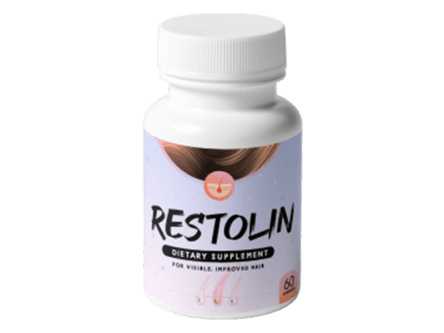
Thinning hair after 40 is one of those things men rarely talk about but almost all of us notice. Restolin is a capsule supplement built around the idea that hair loss is often driven by inflammation and oxidative stress attacking the follicle, not just genetics or DHT alone. We pulled the full ingredient list and checked what's actually backed by research before deciding whether it's worth a spot on this site.
🏆 Quick Verdict: Restolin is an antioxidant-heavy formula (pine bark, Essiac Tea Complex, quercetin, vitamins C and E) built on a genuinely stronger evidence base than most hair supplements in this category — a randomized, placebo-controlled trial found oral pine bark extract increased hair density by 23-30% over 2-6 months (in postmenopausal women, not men specifically). It's still not a clinically proven regrowth treatment on the level of minoxidil or finasteride, but the lead ingredient has real human trial data behind it, and the 60-day guarantee limits the downside of trying it.
Check Restolin Pricing →
What is Restolin?
Restolin is a daily capsule supplement marketed to support healthy hair growth from the inside out, using a blend of antioxidants, vitamins, and botanical extracts rather than a topical treatment. It's aimed at men (and women) noticing thinning hair, a receding hairline, or slower regrowth, positioned as a supporting habit rather than a replacement for dermatological treatment of diagnosed hair loss conditions.
Product Summary
| Feature | Details |
|---|---|
| Product Name | Restolin |
| Format | Capsule, daily supplement |
| Key Ingredients | Pine Bark Extract, Essiac Tea Complex, Quercetin Dihydrate, Vitamins C & E, Cat's Claw, Lycopene, Green Tea, Panax Ginseng |
| Manufacturing | Made in the USA, FDA-registered, GMP-certified facility; non-GMO, non-habit-forming |
| Refund Policy | 60-Day Money-Back Guarantee |
| Where to Buy | Official Website |
The Ingredients: What the Evidence Actually Says
- Pine Bark Extract: The strongest ingredient in the formula, and the reason this review scores higher than most in the category. A randomized, double-blind, placebo-controlled trial (76 postmenopausal women, 150mg/day oral Pycnogenol) measured hair density increasing from a baseline of 225.8 hairs/cm² to 293.6 hairs/cm² after two months — a 30% increase, settling at roughly 23% after six months — via digital Trichoscan imaging, alongside evidence of improved scalp microcirculation. That's a real, hair-specific human trial, not just a general antioxidant claim. The caveat: the study population was postmenopausal women, not men, and Restolin doesn't disclose its Pycnogenol dose, so you can't assume you're getting the studied amount. Still, this is meaningfully stronger evidence than the rest of the formula has.
- Essiac Tea Complex (burdock root, slippery elm, sheep sorrel, Indian rhubarb): A traditional herbal blend with a long history of use, mostly studied (and marketed) in the context of general wellness and detox claims rather than hair growth specifically. There isn't strong direct clinical evidence connecting this complex to hair regrowth — it reads more like a traditional-use ingredient than a targeted one.
- Quercetin Dihydrate: A flavonoid antioxidant with some research suggesting it may support circulation and reduce inflammation, which could theoretically support scalp health, but human trials specifically on quercetin and hair growth are limited.
- Vitamins C and E: Both are legitimate antioxidants with well-established general health benefits, and vitamin C specifically supports collagen production, which matters for hair structure. Neither is a hair-loss treatment on its own, but deficiencies in either can contribute to weaker hair.
- Cat's Claw, Lycopene, Green Tea, Panax Ginseng, Graviola, Turmeric, Grape Seed, Pomegranate, Olive, Garlic: A long list of additional antioxidant and anti-inflammatory botanicals. None of these have hair-specific clinical trials behind them individually — collectively, they reinforce the formula's overall "reduce oxidative stress" thesis rather than adding distinct, proven mechanisms.
Overall: Restolin leans on general antioxidant and anti-inflammatory ingredients, but its lead ingredient — pine bark — is a real outlier in this category, backed by an actual randomized, placebo-controlled hair-density trial rather than just general antioxidant research. That said, the trial was on the finished Pycnogenol extract at a specific dose in postmenopausal women, and there's still no clinical trial on Restolin's finished formula itself, or on most of its other ingredients, tying them to measurable hair regrowth in men. The company's own marketing references DHT (the hormone most linked to male pattern baldness), but the formula doesn't include a well-studied DHT-blocker like saw palmetto — so treat that framing as directional, not a proven mechanism for this specific product.
What Restolin Claims to Help With
Per the manufacturer, Restolin is positioned to support healthy hair growth, reduce thinning, and address the "root cause" of hair loss by targeting inflammation and oxidative stress at the follicle. Realistically: the antioxidant ingredients have plausible, biologically reasonable support for general scalp and follicle health, but this is meaningfully different from a clinically proven regrowth treatment. If you're dealing with significant or rapid hair loss, this supplement is a low-risk supporting habit, not a substitute for a dermatologist's evaluation.
When to See a Doctor First
Sudden, patchy, or rapidly progressing hair loss can be a sign of an underlying condition (thyroid issues, alopecia areata, nutritional deficiencies, or hormonal changes) that a supplement won't address. If your hair loss is sudden rather than gradual, comes with scalp pain or visible bald patches, or you want the strongest evidence-based options, a dermatologist can offer clinically proven treatments like minoxidil or finasteride, which have far more direct research behind them than any ingredient in this formula.
Pricing and Guarantee
Restolin is sold directly through the official website:
- 1 Bottle: $69 + free shipping
- 3 Bottles: $59/bottle ($177 total) + free shipping
- 6 Bottles: $49/bottle ($294 total) + free shipping
Every order is covered by a 60-day money-back guarantee — you have 60 days after shipment to request a refund, provided you return all bottles (including empty ones) to the company's Aurora, CO facility. Return shipping costs are not covered by the company.
Restolin
Pros
- • Lead ingredient (pine bark/Pycnogenol) has an actual randomized, placebo-controlled trial showing a 23-30% hair density increase over 2-6 months
- • Vitamin C and E deficiencies are known to weaken hair, so supplementing covers a real (if basic) nutritional gap
- • Made in the USA, FDA-registered, GMP-certified facility, non-GMO, non-habit-forming
- • 60-day money-back guarantee, even on used bottles
Cons
- • The pine bark trial was in postmenopausal women, not men, and Restolin doesn't disclose its Pycnogenol dose
- • Marketing references DHT, but the formula lacks a well-studied DHT-blocker like saw palmetto
- • Essiac Tea Complex and several other botanicals still lack direct evidence for hair growth specifically
- • Not a substitute for dermatologist-prescribed treatments (minoxidil, finasteride) if you want the strongest evidence-based options
- • Not a fit for sudden or patchy hair loss, which needs medical evaluation, not a supplement
The Verdict
Restolin's lead ingredient, pine bark, has a real hair-density trial behind it — a genuine edge over most supplements in this category, even though that trial wasn't run on men or on Restolin's finished formula at a disclosed dose. It still stops short of being a clinically proven hair-regrowth treatment on the level of minoxidil or finasteride, and the DHT framing on the sales page outruns what's actually in the capsule. Reasonable as a low-risk supporting habit for gradual thinning, especially given the 60-day guarantee, but not a replacement for a dermatologist if your hair loss is significant, sudden, or patchy.
🔒 Official Vendor Site
Frequently Asked Questions (FAQ)
1. Does Restolin actually block DHT? The marketing references DHT as a cause of hair loss, but the formula doesn't include a well-studied DHT-blocking ingredient like saw palmetto. The antioxidant ingredients it does contain work through a different, less direct mechanism — reducing oxidative stress at the follicle.
2. How long before I'd see results? The company doesn't publish a specific timeline, and hair growth cycles are naturally slow (months, not weeks) regardless of the product. If you try it, give it at least 2-3 months before evaluating results, consistent with how hair growth actually works biologically.
3. Is Restolin a replacement for minoxidil or finasteride? No. Those are FDA-approved, clinically proven treatments with substantial direct research behind them. Restolin is a supporting supplement with a much thinner evidence base — a reasonable low-risk addition, not a replacement for proven medical treatments.
4. What's the strongest ingredient in the formula? Pine bark extract, by a clear margin. It's the only ingredient in the formula with an actual randomized, placebo-controlled trial showing a measurable hair density increase (23-30% over 2-6 months) — though that trial was conducted in postmenopausal women, not men, and Restolin doesn't disclose its Pycnogenol dose.
5. Where can I buy Restolin? Restolin is sold through its official website only, processed via BuyGoods, a payment processor for digital and supplement sales.
Scientific References
- Kwiecien, I., et al. "An oral French maritime pine bark extract improves hair density in menopausal women: A randomized, placebo-controlled, double blind intervention study." Phytotherapy Research (2023) — randomized, double-blind trial (n=76) showing 23-30% hair density increase with oral Pycnogenol over 2-6 months.
- General research on oxidative stress as a contributing mechanism in hair follicle aging and thinning.
- Research on vitamin C's role in collagen synthesis and vitamin E's antioxidant function relevant to hair structure.
Maximize Your Results: Hair health is affected by sleep, stress, diet, and scalp circulation as much as by any single supplement — pairing any hair supplement with the basics (protein intake, stress management, gentle scalp care) gives it the best chance to actually make a difference.
Considering Restolin?
See current pricing and the 60-day money-back guarantee on the official Restolin website.
Check Restolin Pricing & Availability →
Have a partner interested in women's health? Visit our sister site, HerVitalityGuide.