If you are searching "Gluco6 vs Gluco Armor," you are probably already past the "does this category even work?" stage and trying to choose between two blood sugar supplements that look alike on the surface: both sold online, both with a multi-bottle discount, both with a money-back guarantee. Here is what we can and can't say about each one.
Quick Answer
Neither product has published clinical trials on the finished formula. Gluco6 leans on a branded prebiotic ingredient (Sukre) that we could not verify independently, plus better-known ingredients like chromium, gymnema and Ceylon cinnamon. Gluco Armor, by the third-party descriptions we found, is built around white mulberry, vitamin E, juniper berries, guggul and biotin, with a longer 90-day guarantee. The choice is mostly about ingredient preference, price and how much you value a longer refund window, not about proven results.
Side-by-Side
| Feature | Gluco6 | Gluco Armor |
|---|---|---|
| Format | Daily capsules | One capsule a day |
| Headline ingredients | Sukre, TeaCrine, Gymnema, Chromium, Ceylon Cinnamon, Green Tea Extract | White Mulberry, Vitamin E, Juniper Berries, Guggul Gum Resin, Biotin (20 ingredients reported; full label not confirmed) |
| Price (best bundle) | $39 per bottle (6 bottles); $49 (3); $69 (2) | $49 per bottle (6 bottles); $59 (3); $79 (1), per third-party pages |
| Guarantee | 60 days | 90 days (some sources report a shorter window; check the official terms) |
| Bonuses | 2 digital guides on 3 and 6 bottle orders | 2 e-books on 3 and 6 bottle orders |
| Trials on the finished product | None found | None found |
Ingredients: What Each One Is Betting On
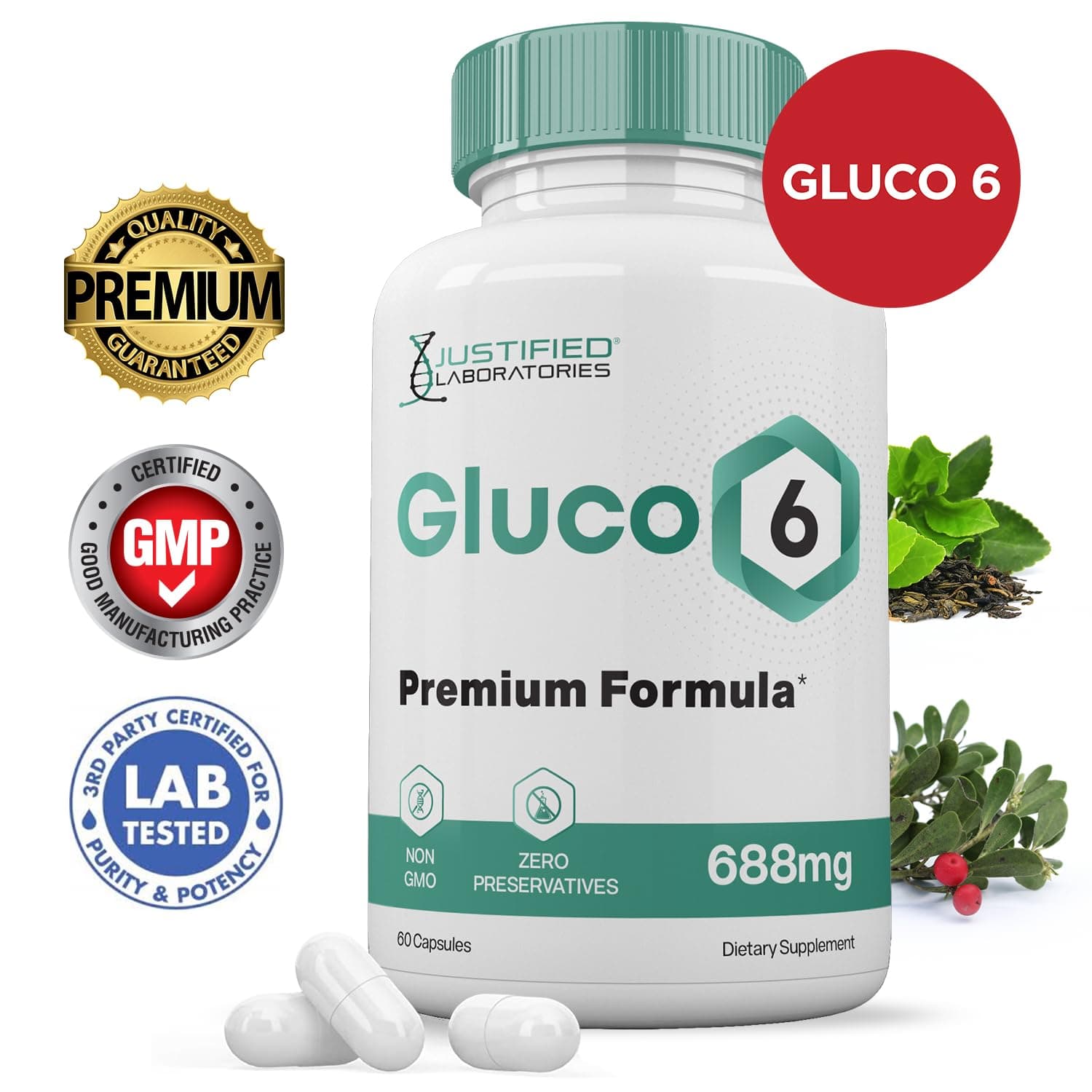
Gluco6 pairs a branded prebiotic sugar called Sukre with ingredients that have been studied for blood sugar: chromium, gymnema and Ceylon cinnamon. The "GLUT-4 receptor" mechanism is the brand's explanation, and we could not find independent research confirming how Sukre works, so treat that part as marketing framing. The studied ingredients have modest, mixed evidence in humans, and results in trials are usually small.
Gluco Armor, per the third-party descriptions, relies on white mulberry (which has research on slowing carbohydrate digestion), vitamin E, juniper berries, guggul and biotin. White mulberry is probably the best-supported of that group. The juniper berry and guggul evidence mostly comes from animal and lab studies, and the full ingredient list and doses are not consistent across the pages we found.
Neither company publishes a trial of its complete formula. That is normal for supplements, but it means any promise of "lower A1C" should be read as a hope, not a result.
Is Gluco6 a Scam? What We Found
We searched for complaints before writing this. Most of what ranks for "Gluco6 reviews" and "Gluco6 scam" is promotional content that looks like it exists to earn commissions, and the few negative pieces do not cite verifiable cases. One article calls the product a scam and says its "Clinically Tested" and "Made in the USA" claims lack documentation. We could not confirm refund denials or billing abuse from any source we trust. So the fair summary is: no verified pattern of fraud, but also no independent proof that it works, and some claims on the sales page are not documented. The same is true of Gluco Armor.
Before you buy either product, check that the seller lists a real refund contact, and keep your order confirmation so you can use the guarantee.
Which One Fits You?
- You want the longer refund window: Gluco Armor reports 90 days against Gluco6's 60. Confirm this on the official terms, since sources disagree.
- You prefer ingredients with human data on blood sugar (chromium, cinnamon, gymnema): Gluco6's list leans that way, though the effect sizes are modest.
- You care most about price per bottle: at the 6-bottle level, Gluco6 is $39 against about $49 for Gluco Armor.
- You take diabetes or blood pressure medication, or have a diagnosis: talk to your doctor before either one. Both can interact with glucose-lowering drugs.
When to See a Doctor First
Neither supplement is a substitute for insulin, prescribed diabetes medication, or medical monitoring. See a doctor if you have excessive thirst, frequent urination, unexplained weight loss, blurred vision, or numbness in your hands or feet, or if you take any blood sugar-lowering medication. A simple fasting glucose or A1C test will tell you more than any supplement trial and error.
Our Take
If you want to try one, Gluco6 is the one we reviewed in full, and you can read the details here: Gluco6 Review. Our honest read of both is the same: plausible, modestly supported ingredients, no proof on the finished formula, and a refund window you should actually use if you don't see a difference after a fair trial of 8 to 12 weeks.
Frequently Asked Questions
Is Gluco6 better than Gluco Armor? We can't say one is better. Neither has trial data on the finished formula. They differ in ingredients, price and guarantee length.
Is Gluco6 a scam? We found no verified pattern of fraud or billing abuse, but we also found no independent proof that it works, and some sales-page claims are undocumented.
Can I take either one with diabetes medication? Only with your doctor's approval, because both may affect blood sugar.
How long should I try one before judging it? Plan for 8 to 12 weeks of consistent use, and keep your order confirmation in case you use the guarantee.
Scientific References
- Allen, R. W., et al. (2013). Cinnamon use in type 2 diabetes: an updated systematic review and meta-analysis. The Annals of Family Medicine, 11(5), 452-459.
- Baskaran, K., et al. (1990). Antidiabetic effect of a leaf extract from Gymnema sylvestre in non-insulin-dependent diabetes mellitus patients. Journal of Ethnopharmacology, 30(3), 295-305.
- Frontiers in Pharmacology (2023). Evaluation of mulberry leaves' hypoglycemic properties and hypoglycemic mechanisms.
Have a partner interested in women's health? Visit our sister site, HerVitalityGuide.